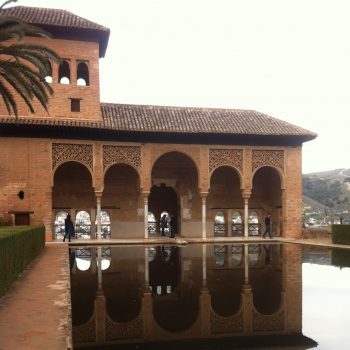
What they don’t tell NALCAP Teachers about País Vasco
Dear Joshua,
If you’ve been around for awhile, you’ll know we’ve covered countless topics from the different regions of Spain, to teaching with auxiliares to travel tips, but one region we’ve never been able to cover from a first-hand experience POV is expat life in the Basque Country. That’s why when Anthony, a current NALCAP teacher in Bilbao, reached out with the offer to share his insights, we jumped at the opportunity.
The rest of today’s post is written by Anthony, who loves to explore, teach, and always look to discover more. He’s currently working and living in Euskadi (officially known as País Vasco in Castellano). Anthony chose to begin his adventure in Spain there for its strong, independent culture alongside its natural beauty, and world renowned cuisine specializing in seafood. He also says the fact that this area is just along the border of France doesn’t hurt either for occasional weekend trips.
 We know that the Basque Country is a region that people from outside of Spain can be less familiar with, so it’s valuable to give a bit of context before jumping into Anthony’s post. You can check out past articles like Introduction to Basque Country, but for the sake of today’s topic it’s specifically helpful to understand that the Basque Country is one of the northern most comunidades autónomas (autonomous communities) of Spain. This area is known officially to the Spanish Government & Crown as País Vasco (in Spanish).
As someone who lives in the area, Antonio thinks of it and will refer to it as Euskadi (as it is called in the local language, Euskara). The Basque people (Euskal) are proud of their history and fiercely independent. It is a commonly held belief in Euskadi that “this is not Spain, this is not France.” Instead, Euskal take pride in their distinction from the rest of Spain through their own language and traditions. You will see the importance of this shining through in Antonio’s practical tips for teaching and living in Euskadi.
Without further ado, we bring you guest writer, Anthony…
What they don’t tell NALCAP Teachers about País Vasco
If you’re a first-time NALCAP (also often referred to as the Auxiliares de Conversación program) assistant teacher from the US and or you got placed in País Vasco this is for YOU.
Firstly, Congratulations! By doing something different and pushing the boundaries of what’s “normal” and “expected” in life, you’re taking the path less traveled and far more rewarding.
Below are a few points for those of you who have been placed but haven’t yet had your consulate appointment or gotten your visa (and, disclaimer, this was written at the end of 2025).
You’re going to need money (at least 8,000€)
 You may have applied as a NALCAP because Spain pays a stipend to cover living expenses while you are here. It’s not enough on its own. Your program and even the NALCAP website will claim it’s around what locals make; as of 2025 there is a minimum wage (salario minimo, which was raised in 2025) in Spain and what you make, depending on the area, is likely well below this and the actual cost of living (800-1000 € per month).
If you want to truly get a full cultural experience here, try the food, go to festivals, or just travel around, this is basically impossible on just your stipend. You will be limited to just walking around your barrio (neighborhood) and if you’re very good with budgeting maybe getting a tapa/pintxo every now and again.
Note: Because you are making below the minimum wage; your rental/landlord may request you pay double the security department on a piso (apartment). Also note, some commercial landlords charge a “move in fee” that can be up to 100€; all things that you have to account for if housing is difficult in the location where you are placed.
Start the apartment search early
Start looking for an apartment or connecting with roommates as soon as you have placement and right after you have had your appointment with BLS (more on that below). This region is no different to many places all over the world; access to inexpensive housing is hard and, naturally, if you’re in a city it’s going to be very hard. Expect to spend up to 60% of your stipend just for a place to put your stuff. Idealista is the most common site and there are others but if you have other NALCAP auxes you have connected with placed in the same area it may be financially cheaper to look for a local realtor (called inmobiliarios) in the area to help you find a place and you can split the rent amongst your prospective roommates.
There are companies (such as Habitación in Bilbao) that own many properties and can likely place you quickly note the rent is higher and while it includes all utilities (even internet) you will likely be paying as much for all of that as it costs per month for everyone your sharing the apartment with (example for heating, water, sewer, and internet it costs 100€ per month but everyone in the flat will pay that per person, per month to the landlord making them a profit [or as their argument would be “to cover unexpected utility increases so as not to incur a loss]).
Apply for your visa appointment immediately
 Like basically every company’s customer service experience, Spain has outsourced its visa processing to a private secondary company. That company is BLS and their appointments disappear faster than concert tickets on Ticketmaster.
They release the appointments at random times during the month. Their process is not transparent. You’re going to want to apply for your visa appointment on the BLS website immediately. You will have to check every day multiple times during the day to get an appointment and nobody else except you can make an appointment. You cannot go to their office for walk in’s to make an appointment and it may take a couple of months to get an appointment.
Disclaimers for those in California, US.
- Don’t wait to get placed, start looking for appointments in January for April-May (when schools typically notify of placement)! You can always update the information on the BLS site if needed and if you need to reschedule it’s much easier to do so with an appointment than getting one for the first time (and yes there is a fee of $19, as of writing this to change, but it’s worth the price of having certainty and an appointment to arrive on time for school than not having one at all).
- The BLS offices there have the unique reputation of being particularly understaffed, gets the most applications annually, and as a result takes the longest to not only get an appointment but how long it will take to get your visa will be arbitrary as well. It could take months of daily checking the BLS site to get an appointment and then once you have had your appointment it can take up to eight weeks (or more) just to process and send your visa. If you are a Californian resident and live somewhat near the consulate offices; its best to just pick up in person rather than have additional delays of waiting for your visa and passport to be returned to you via mail (or worse, being lost in the mail).
Reach out to your school ASAP
Once you receive placement you should get some contact information for your coordinator at the school. Reach out to them ASAP just to say hi, introduce yourself, and let them know where you are in the process. It’s key to establish this line of communication early on in case any issues arise (see above) in the visa process and timing.
Living in Euskadi (País Vasco)
Understanding the language situation
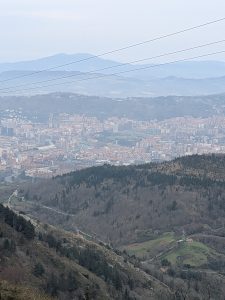 They will tell you Euskara (Basque) is one of the oldest living languages on earth. What they don’t always mention is how widely it is spoken, especially in rural areas—where in many cases it replaces the use of Castellano (Spanish) altogether. If you’re NALCAP and teaching in schools this is the default language in class and in interactions with fellow teachers. Your coordinator and the other English language teachers will more than likely speak English well, but you will need to learn some Euskara (Basque) before you arrive.
Yes, you can of course get by alright if you speak Castellano, even just a little. But, especially in smaller rural areas, it will make it a challenge to truly immerse yourself in the culture and frankly it’s considered disrespectful by locals if you don’t at least make the effort to speak it first (even if just a few words). If you just speak English you going to have a double challenge of not only learning Euskara but Castellano as well. Remember you’re here to teach English for a reason…it’s not “lingua franca” here, it’s considered a skill (that’s why the government is hosting you) and many do not speak it.
My suggestion: Ask your local school if you can use the same materials the children use to learn Euskara so you can learn in your spare time. This will not only create a great first impression but will show that you care about the cultural exchange being both ways. You can always pursue tutoring but as noted earlier, at 20-25€, a session may not be possible depending on your situation. Another option, beyond just using language apps (though there are very few that have Basque as a language) is your local Euskadi Library (free to anyone to use, all you need is your passport to prove your identity to get a card).
Getting around
If you’re from the US, you’ll find getting around the metropolitan areas of Euskara via the Metro Bilbao to be some of the easiest, most convenient public transit you will ever experience anywhere in the world. You don’t need a car or a taxi; there are buses, metro, light rail, and trains running all hours of the day to meet your needs. My suggestion is to buy a metro pass called an “Abono Oro.”
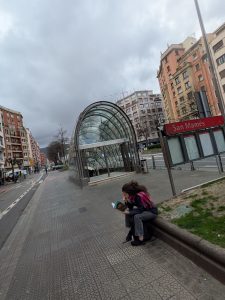 To do this you will need to stop at the Metro Bilbao office (locations are in Sarriko, San Mames, and Abando) and register with an agent. They will need your passport or visa, take your picture, and in a sense it becomes a form of an ID card. Be sure that when you initially purchase with the metro agent (or when renewing after the first month at the Metro kiosk) to select starting points Zona 1 to Zona 3 so for one flat fee per month (as of 2025 – 35€) you can explore all areas of the metro.
Likely, you will be assigned to work in a rural area so you will also need to purchase an abono Renfe train pass (as of 2025, 20€ per month), with which you can access all lines in one of two areas in the Bilbao Metro Area (San Mames or Abando). To initially get this, just like with the metro pass you will need to visit a Renfe attendant kiosk and provide your passport or visa. Unlike the metro card, however, it’s just a paper ticket and can’t serve as an ID.
Note you can just use your metro card for both the metro and the Renfe but you would need to add additional funds to the metro card on top of the monthly pass for just using the metro lines to use the train. If you’re using the train to explore areas beyond Bilbao (such as San Sebastian, etc) it won’t be as cost effective than just having an abono for both.
You can also use the bus (it’s called Bizkaia Bus). This can be cheaper and it can be faster in some cases, plus they have their own monthly passes. However, I have found the metro and the train to be the more consistent (and less crowded) options of the three as the majority of locals use the bus especially at peak hours which can mean you will have to wait for another bus to come if you’re last in line to get on.
Local Food & Connections
Keep in mind that in Spain, bars don’t mean what we think of in the US. If anything, they are community centers where everyone (and I do mean everyone, from the old to young, including Especially in Casco Viejo [Old Town], places that are explicitly called restaurants, have menus in English, or say “Tapas Bar” in the name are going to be much more expensive than places that are just “bars” (because they are specifically targeting tourists). While the rest of Spain has tapas, in Euskadi they have pintxos. They are delicious and the varieties are infinite but here are some of the more common pinxtos you will find.
Euskal also have their own kind of wine, called txakoli. A relative in comparison with white wine in both appearance and taste, it’s less alcoholic but pairs very well with pintxos. Another that you will encounter that is a local very popular favorite is Kalimotxo. This is a drink that combines red wine with coca cola–and yes, if invited out by locals who order it, is your obligation to try it.
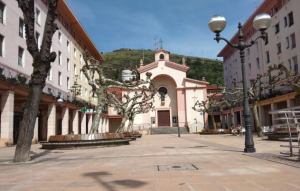 Speaking of being invited out, this may involve a txoko which essentially is a group cookout (but indoors) among friends and family in a communal (often rented commercial) kitchen. Everyone typically pays a set amount to buy the ingredients and drinks as a part of a membership fee but, pro-tip: as a guest do not offer to pay, as this is considered disrespectful. You can of course, invite your patron in the future to drinks and pintxos to return the favor.
How do I get invited to one of these you may ask? See above about learning Euskara, make friends with teachers and other assistant teachers at your schools, and or a tried and true method; join a Meetup group or look for Eukara-English or Spanish-English exchange groups on Instagram or Facebook.
Lastly, and if you can afford it, gyms are also a fantastic way to meet new friends and connections in Euskadi and there are many but my personal recommendation; go where the locals do the Kiroldegia/ Kirolak or local sports center/community center. Each barrio has them, the gyms are modern, and there are all kinds of sports teams you can join–all of which is a great way to live and immerse yourself like a local.
Thank you so much to Anthony for sharing these valuable tips and insights into life as a NALCAP teacher in País Vasco! We hope you enjoyed his post. Let us know if you have any questions down below.


Related Posts
What is el Día de Andalucía (Day of Andalusia)

The Importance of Coffee Shops in Spain