Costa del Sol Like a Local
Dear Dina,
Are you someone who has lived in Spain for a long time already, but still seek out discovering new places that aren’t your typical tourist spots? Or maybe you’re a regular visitor to the sunny coast of Spain but are looking to experience it in an authentic way next time? If either set of circumstances resonates, this is the post for you!
Today’s guest writer, Thomas Bjerkan, is the founder of TourCostaDelSol.com. Originally from Denmark and now living in the hills outside Málaga, he spends much of his time exploring the towns, villages, and traditions that shape everyday life in southern Spain. Reading through his tips on experiencing Costa del Sol like a local really reminded us of the beauty of everything we love about life here, and how taking our time and taking in the small details of the world around us can feel so magical. We hope it will inspire you in a similar way!
Without further ado, we bring you Thomas…
Costa del Sol Like a Local
Most people arrive on the Costa del Sol with a familiar image in mind.
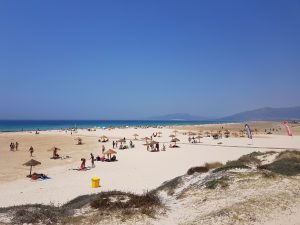 Sunshine. Beaches. A cold drink by the sea. Perhaps a week spent moving between the hotel pool and the promenade before flying home with a tan and a few hundred photos on their phone.
There is nothing wrong with that version of the Costa del Sol. After all, millions of people fall in love with this stretch of coastline every year.
But living here has taught me something unexpected: the moments that stay with you the longest often happen away from the places visitors rush to see.
The real Costa del Sol is less about landmarks and more about rhythm.
It is the pace of daily life. It is long lunches that somehow become dinners. It is neighbors greeting each other by name at the local café. It is village festivals that still revolve around community rather than tourism.
For anyone wanting to experience the Costa del Sol like a local, the first step is surprisingly simple:
Slow down.
Start the Weekend Slowly
One of the first things I noticed after moving to southern Spain was how differently people treat time.
 In much of northern Europe, weekends are often planned down to the hour. Here in Andalucía, there seems to be far less urgency. Saturday mornings are not for rushing, they are for lingering.
Instead of filling your day with sightseeing, try spending a morning exactly as locals do.
Find a neighborhood café and order a tostada con tomate y aceite, the classic Andalusian breakfast of toasted bread, olive oil, and crushed tomato. Sit outside if you can. Watch the morning unfold around you.
You quickly begin to notice the small things.
Regulars arrive and greet the staff by name. Newspapers are shared between tables. Conversations drift lazily from football to family news. Nobody appears to be in a hurry.
In Málaga, you only need to step a few streets away from the historic center to find this rhythm. In Fuengirola, some of the quieter cafés in Los Boliches still feel more local than touristy. Even Marbella, often associated with luxury and glamour, has peaceful corners where daily life moves at its own pace.
The point is not to do more. The point is to notice more.
Explore the Towns Between the Headlines
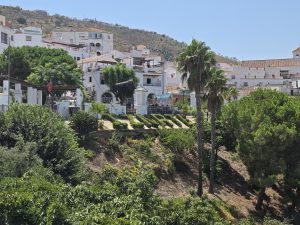 When people talk about the Costa del Sol, the conversation usually centers on the same places: Marbella, Puerto Banús, and Málaga. Yet some of the region’s most rewarding experiences happen elsewhere.
Drive inland for half an hour and the landscape changes dramatically. White villages cling to hillsides. Olive groves replace beach resorts. The air feels cooler, and life seems to slow down another notch.
Mijas Pueblo remains one of the most beautiful hill towns on the coast, especially in the early morning before day-trippers arrive. Benalmádena Pueblo still feels like a proper Andalusian town despite its proximity to the sea.
Further east, the Axarquía region reveals an entirely different side of Málaga province. Villages such as Iznate and Frigiliana feel worlds away from the beach resorts, despite being less than an hour’s drive from the coast. If you want to map out a route through these hidden spots, you can find my handpicked local recommendations in this comprehensive Costa del Sol travel guide.
One of the things I appreciate most about these places is that they are not trying to become the next social media sensation. Life carries on much as it always has.
And perhaps that is exactly their charm.
Eat on Local Time
 Many newcomers to Spain discover this quickly: if you look for dinner at six in the evening, you may find yourself eating alone.
Life on the Costa del Sol follows its own schedule.
Lunch is often the main event of the day, particularly at weekends. Families gather around large tables, friends meet for hours, and meals unfold slowly rather than efficiently.
And then comes one of Spain’s great traditions: la sobremesa.
There is no perfect English translation. It refers to the time spent sitting together after a meal, talking long after the plates have been cleared away. When I first arrived in Spain, I found it strange that lunch could stretch for several hours. Now it feels completely natural.
If you really want to experience local life, embrace this rhythm.
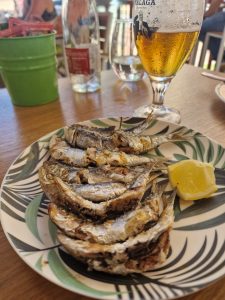
Spend a lazy afternoon at a beachside chiringuito. Order grilled fish, a salad, and perhaps a glass of local wine. If you’re in Málaga, try espetos, sardines grilled over olive-wood fires in old fishing boats on the beach.
And then do something many visitors struggle with: stay longer than you planned.
Experience the Smaller Festivals
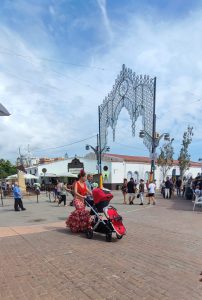 Most visitors know about Málaga Feria, one of Andalucía’s largest celebrations. But some of the smaller local or neighborhood festivals offer a far more intimate glimpse into community life.
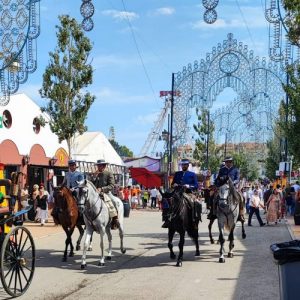
If you are on the coast, you don’t necessarily have to dive into the massive crowds of the capital to experience the festive spirit. In Fuengirola’s own neighborhood celebrations, for example, the atmosphere feels deeply personal. Here, the streets come alive with locals riding beautiful Andalusian horses through the fairgrounds, and women of all ages wearing breathtaking, traditional flamenco dresses. It is a stunning visual celebration of local heritage that feels like a shared community moment rather than a tourist attraction.
Further inland, the landscape reveals an entirely different tradition. As summer ends, the mountain villages of the Axarquía region celebrate their harvest.
One of my absolute favorites is the Fiesta de la Uva Moscatel in the tiny white village of Iznate. Dedicated to the sweet local Muscatel grapes and raisins, the village opens up its narrow, winding streets for a day of food, music, and tradition. Neighbors set up small stalls outside their doors, offering free tastings of local wines, cheeses, and traditional dishes to anyone passing by.
In some of these mountain villages, you may quickly discover that you are one of very few international visitors present. You do not need to understand every local custom or song. Simply showing up, accepting a glass of wine from a neighbor, and taking in the rhythm of the village is more than enough.
Discover the Coast After Sunset
Many travel guides focus almost entirely on daytime activities. But evenings reveal another side of the Costa del Sol.
As the heat fades, public life moves outdoors. Promenades fill with families taking their evening stroll. Squares echo with children playing football. Restaurant terraces slowly come alive.
One of my favorite things about living here is the evening paseo. It is not really exercise, and it is not exactly sightseeing. It is simply a social ritual – a chance to walk, talk, and enjoy the cooler air.
In Spain, public spaces are lived in. The street often feels like an extension of the home. For newcomers from northern Europe, this can feel surprisingly refreshing.
Spend Time by the Sea Without an Agenda
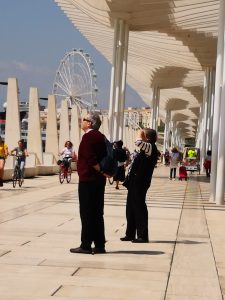
An international visitor often plans entire beach days. Locals usually do something simpler: they stop by for an hour.
A morning walk before work. A quick coffee overlooking the sea. An evening stroll after dinner.
Some of my favorite moments on the Costa del Sol have involved doing very little at all: sitting on a bench in Nerja watching the waves, listening to conversations drifting from nearby tables, or watching fishing boats return at sunset.
Living in southern Spain slowly changes your relationship with time. You learn that not every moment needs to be productive. Sometimes being present is enough.
Leave Room for the Unexpected
Looking back, many of my favorite memories from Andalucía were never planned. A village market discovered by accident. A restaurant recommended by a stranger. A local festival stumbled upon while driving through the mountains.
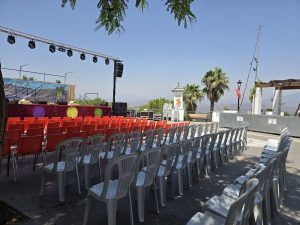 The Costa del Sol rewards curiosity. Take the side street. Accept local recommendations. Stay an extra hour when a place feels right.
The region rarely reveals its best side immediately. More often, it appears quietly and unexpectedly.
Experiencing the Costa del Sol like a local does not require secret knowledge or hidden maps. It simply requires slowing down enough to see what has been there all along. And once you begin to move at the local pace, you may find that the Costa del Sol feels less like a destination, and more like a way of life.
Thank you, Thomas for these beautiful, heartfelt tips! If you would like to find more local tips, destination guides, and ideas for exploring the region beyond the usual tourist spots, check out Thomas’s independent travel guide: Tour Costa del Sol.



2 Comments
Debbie
Really enjoyed this article, hope to see a bit more local flare on our next visit🙏
Sincerely, Spain
Yes!! Hoping that for you too 🙂